

Mr. Ramesh Shivanna
Chief Technical Officer
Nithin Sai Renewables Pvt. Ltd.
The Government of India’s renewed emphasis on manufacturing- especially in solar module, cell, and wind turbine production-is starting to reshape the energy landscape. Through targeted policies like approved line of model manufacturing (ALMM) 1 & 2 for solar and the brand-new ALMM-Wind, India is not just promoting green energy-it’s building a domestic manufacturing powerhouse.
Policy Momentum: ALMM for Solar & Wind
- ALMM 1 (Solar Modules) and ALMM 2 (Solar Cells) now require all grid-connected solar procurement to source from approved domestic manufacturers. This has accelerated capacity growth and triggered a wave of investments.
- On 31 July 2025, the Ministry of New & Renewable Energy (MNRE) released the ALMM Wind amendment, mandating critical components – blades, towers, gearboxes, generators, and bearings-from ALMM-approved suppliers, and requiring R&D and data centers to be based in.
- Now, the focus is also shifting to energy storage manufacturing, crucial for grid stability in a renewable-heavy future.
Solar Modules & Cells
- As of March 2025, India boasts nearly 742 GW of module manufacturing capacity, up from just 72 GW in 2020 – credit goes to the key policy of ALMM mandates and major investments.
- In 2024 alone, India added 25.37 GW of solar module manufacturing capacity and 11.6 GW of Solar cell manufacturing capacity.
Battery Energy Storage Systems (BESS)
India’s renewable push is incomplete without energy storage. Recognizing this, both the central and state governments are encouraging the development of Battery Energy Storage Systems (BESS) to enable round-the-clock (RTC) renewable energy and enhance grid reliability.
- The Government of India has announced tenders for over 9 GWh of BESS for grid applications under the Viability Gap Funding (VGF) scheme.
- Leading states like Karnataka, Gujarat, and Rajasthan are facilitating private-sector BESS manufacturing zones.
- Upcoming manufacturing parks in Karnataka’s KIADB zones aim to attract cell-to-pack and rack-to-container production lines, in partnership with global tech providers.
Wind Turbine Equipment
- At the national level, India is presently the fourth-largest wind market globally. India now has an annual wind turbine manufacturing capacity of about 15-16 GW, with actual installations currently at ~51 GW as of May 2025 and steadily scaling exports and domestic supply chains.
- Domestic indigenization of wind component manufacturing ranges between 70-80%, giving local OEMs like Suzlon, Inox, Adani, and Envision a strong footing.
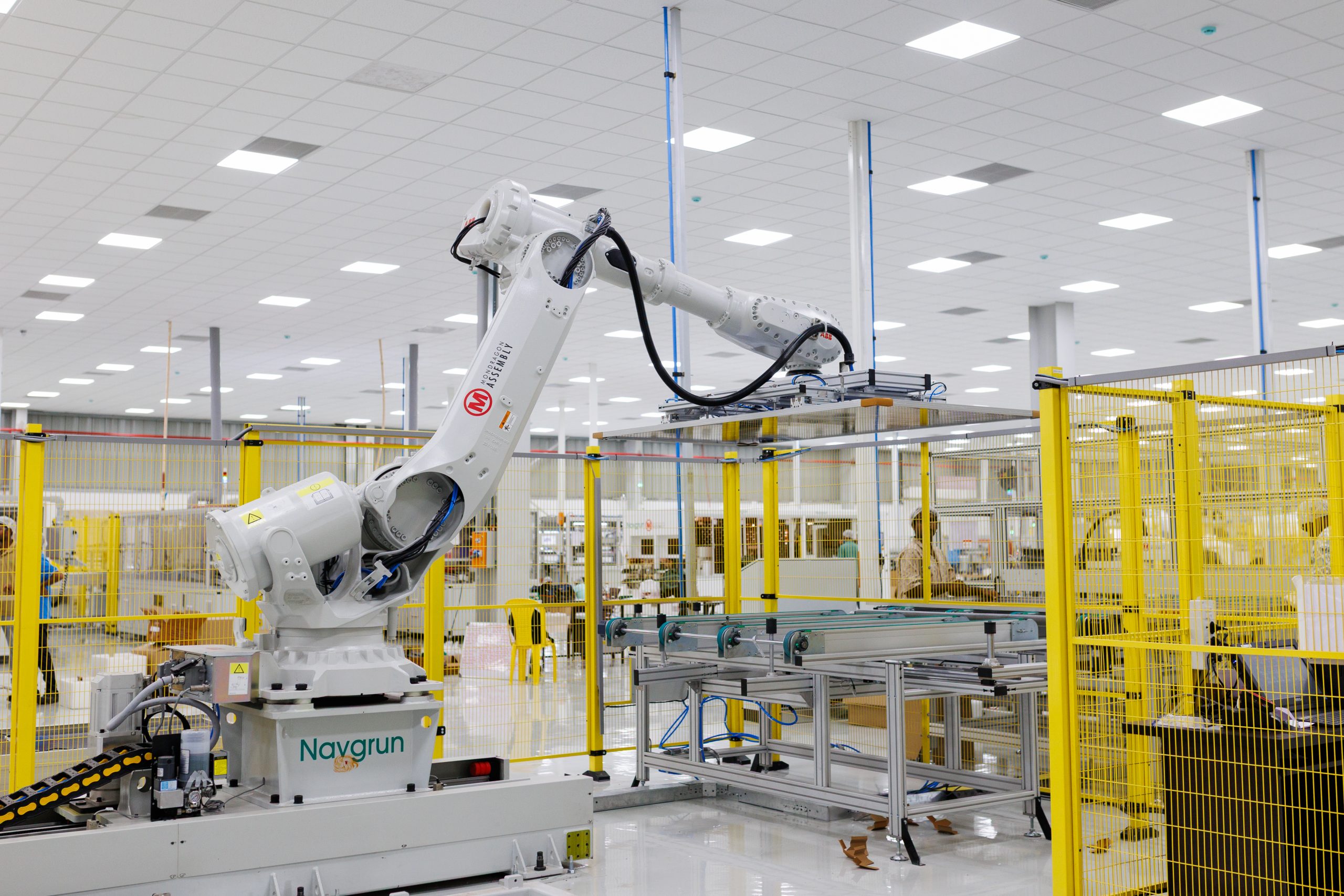
Karnataka is emerging as a solar manufacturing hub. Karnataka hosts leading players like Emmvee Solar, Tata Solar, Navgrun, Orb, etc., strengthening its place on India’s green manufacturing map. Some of the leading Solar inverter brands have manufacturing facilities in Karnataka, like Schneider, ABB, Fimer, Sun Grow, TMEIC, TBEA, Sineng, Powerone, POM, etc.
Karnataka is also particularly emerging as a hub for battery pack and containerized BESS hosts, leading players like Excide, Pace Digitech, Navgrun, Nash, etc.
In Wind equipment states like Tamil Nadu, Gujarat, and Maharashtra remain dominant, with Karnataka now catching up through domestic partnerships.
Imports to Domestic Value: Trade & Replacement
- India has historically imported the majority of cells and modules. Now, over 85% of modules installed under ALMM tenders are domestically manufactured.
- India’s solar module exports have surged -reaching nearly Rs 16,000 Cr (USD 2 Billion) in 2023-24, up from just 2700 crore two years earlier.
- In wind, the import dependency for major components is steadily falling due to the new ALMM-Wind regime. Wind and BESS components are poised to follow the Solar trajectory, especially as Europe, Africa, and Southeast Asia look to diversify their supplier base beyond China.
Why This Matters
1. Policy Catalyst: ALMM Solar and ALMM Wind are not just protective – they are stimulative, driving manufacturing localization in a big way.
2. Energy Security: Reduced import reliance shields India from global disruptions and price volatility.
3. Employment & Export Growth: Local manufacturing is creating jobs, boosting exports, and fueling regional ecosystems. Solar manufacturing has created 1,20,000 jobs as of 2024 -25 and is expected to reach 3,00,000 direct jobs as India scales to 100 + GW capacity. Wind manufacturing is creating 75000 jobs and is expected to create 2,00,000 by 2030. BESS has direct jobs of 10,000 now, and by 2030 expected to have over 100,000 direct jobs in India to build 50+ GW manufacturing capacity.
4. R&D & Innovation: Mandated R&D and data localization under ALMM-Wind are promoting tech advancement within India.
Final Thought
India’s solar and wind manufacturing ecosystem is no longer nascent – it’s at the cusp of becoming globally competitive. With smart policy and growing private investment, the country is poised not just to light up itself, but to export its energy to the world.